BILL LANE FOUNDATION
Celebrating the life & accomplishments of famed syndicated black entertainment journalist, author and advocate Bill Lane
FEATURING ARTICLES, INTERVIEWS, REVIEWS & PHOTOS BY & ABOUT FAMED JOUNALIST BILL LANE
Our Mission
The Bill Lane Foundation is dedicated to supporting black entertainment and journalism heritage. We aim to preserve the legacy of William Clay 'Bill' Lane and promote diversity in media.
BILL LANE TRIBUTE BY LINDA SUE LANE

The Architect of Black Media and Hollywood Equity: The Life and Accomplishments of Bill Lane
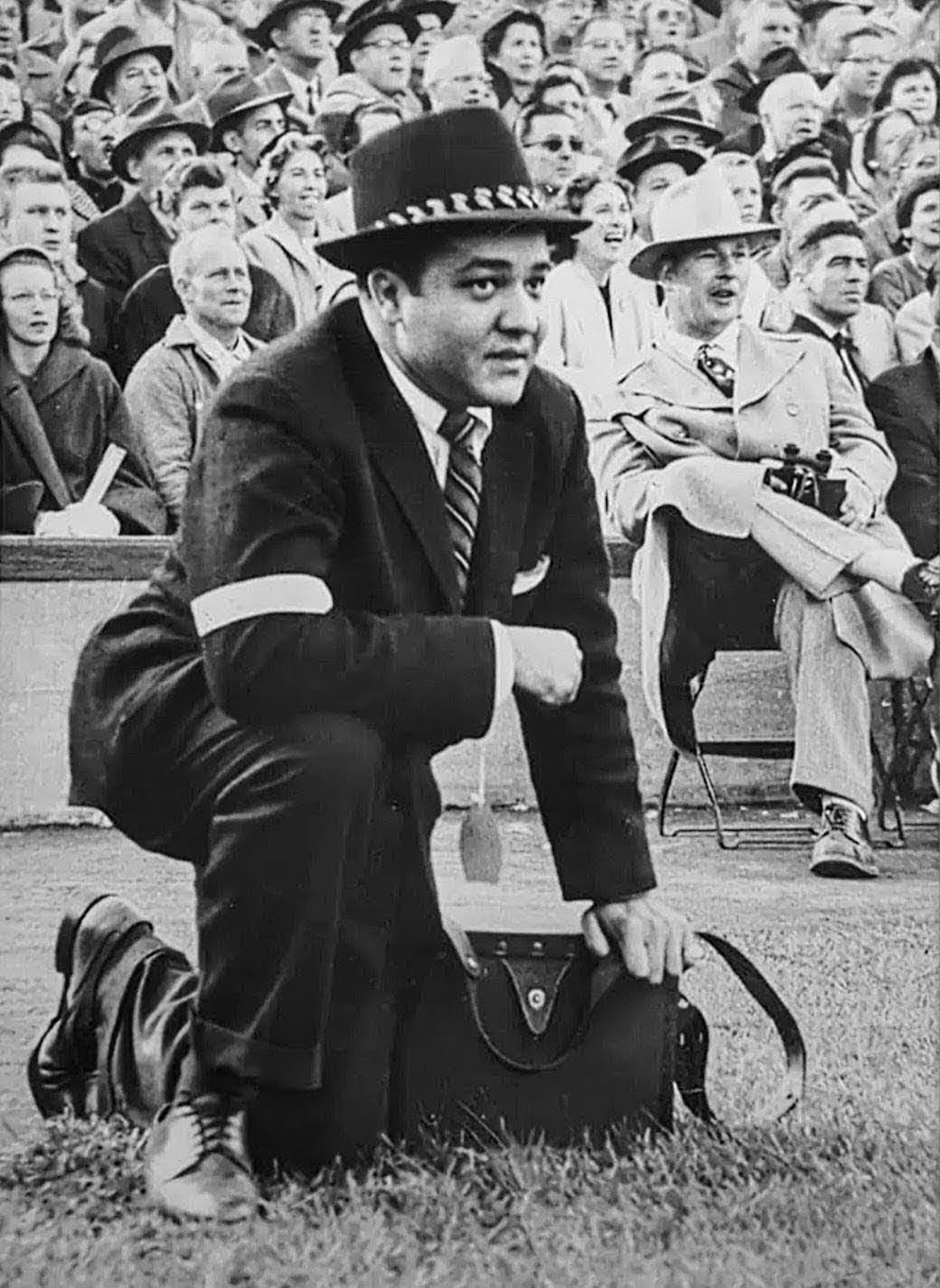
William "Bill" Clay Lane (January 27, 1922 – June 21, 1995) was a monumental figure in 20th-century African American journalism, independent news publishing, and civil rights advocacy. Born in the rural Mississippi Delta and laid to rest in the heart of the global entertainment capital, Lane’s life trajectory mirrored the Great Migration and the mid-century fight for Black representation.
Operating at the intersection of the Black press, the music industry, and Hollywood, Lane was a formidable force who did not merely chronicle Black entertainment—he actively shaped, built, and integrated it. He is remembered as a visionary publication editor, an influential industry power broker, a dedicated biographer, and a tireless institutional reformer.
Early Life and Migration North
Bill Lane was born on January 27, 1922, in Rosedale, Mississippi, a historic steamboat landing town in Bolivar County along the Mississippi River. Growing up in the segregated American South, Lane’s early worldview was shaped by the rich cultural traditions of the Delta—the birthplace of the blues—alongside the severe socioeconomic limitations of Jim Crow.
Before establishing his prominent footprint in Detroit and Los Angeles, Bill Lane spent a formative period during the early 1940s in Memphis, Tennessee—a vital cultural and musical hub for African American entertainers. During this era, Lane navigated the intricate local landscape by working at the famed Peabody Hotel, a central venue for regional big band music, and through an association with Omera Hood, a prominent and politically connected Beale Street figure and brothel business owner. While working at the Peabody Hotel, Bill performed as a guitarist in a small employee organized Jazz band there and around Beale Street called The Hotel Men's Improvement Club. This early exposure to the Southern entertainment ecosystem provided Lane with foundational insights into the business arrangements, talent networks, and systemic challenges that defined Black entertainment, heavily influencing his subsequent career as a strategist and advocate.
Seeking greater opportunities, Lane joined the historic Great Migration northward, migrating to Detroit, Michigan, in the 1940s. It was here that his innate brilliance for writing and narrative design transformed him from a keen observer of culture into a professional communicator.
The Detroit Era: Radio and The Michigan Chronicle
In Detroit, Lane quickly embedded himself in the city's rapidly expanding African American cultural and economic landscape.
The Michigan Chronicle: Lane joined the staff of The Michigan Chronicle, one of the nation's premier Black weekly newspapers. As a sharp-witted beat reporter and entertainment writer, he provided dignified, sophisticated coverage of local and national African American figures, establishing a standard of journalistic excellence that challenged the dismissive caricatures common in mainstream white media.
Radio Broadcasting Pioneer: In the early 1950s, Lane broke through significant racial barriers in the broadcast industry by becoming an on-air personality at WJR Radio in Detroit. His appointment made him the first Black broadcaster to hold an on-air position at the historically all-white station, paving the way for future generations of Black radio journalists and disc jockeys in the Midwest.
The Discovery of Della Reese: While talent scouting and writing in Detroit, Lane recognized the immense vocal power of a young gospel singer named Delloreese Patricia Early. Recognizing her crossover potential, Lane became instrumental in her discovery and early career guidance. He helped transition her from church choirs to secular nightclub circuits, utilizing his media connections to secure her early press coverage. She would rise to international fame as jazz and pop icon Della Reese, later making television history as the star of Touched by an Angel.
Shifting to the West Coast: The Los Angeles Sentinel
As the center of gravity for the Black entertainment world increasingly shifted toward California, Lane relocated to Los Angeles. He became a principal entertainment writer, columnist, and critic for the Los Angeles Sentinel, the most influential African American newspaper on the West Coast.
Through his syndicated columns, Lane possessed an authoritative voice that could make or break national acts. He used his platform to chronicle the golden age of jazz, the rise of West Coast R&B, and the burgeoning presence of Black actors in television and film, acting as a critical bridge between old-guard showbiz legends and the modern Hollywood era.
National Publishing Leadership & Entrepreneurship
Lane’s career was defined by an entrepreneurial drive to expand the scope and infrastructure of independent Black-owned media.
Editor-in-Chief of Sepia Magazine
Lane reached a pinnacle in national print media when he was named Editor-in-Chief of Sepia magazine. Based out of Texas but distributed internationally, Sepia was a high-quality, photo-journalistic monthly magazine that stood as the primary competitor to John H. Johnson’s Ebony. Under Lane’s editorial vision, Sepia did not just cover celebrity gossip; it published hard-hitting investigative journalism regarding the Civil Rights Movement, deep-dive profiles of political leaders, and rich pictorial essays documenting global Black culture.
Founder of World News Syndicate Ltd and National World Newspaper
Believing that Black news required an independent, global distribution apparatus, already a nationally syndicated columnist, Lane founded and published the World News Syndicate, Ltd an agency he helmed for over 25 years. World News Syndicate served as a vital wire service, distributing high-quality entertainment reviews, news accounts, cultural critiques, interviews, and political commentary to both White and Black-owned newspapers and magazines across the globe. While operating out of major media hubs in both Detroit and California, Lane authored highly influential, widely circulated columns that were distributed nationally via independent media networks and wire services like his own. Importantly, this continuous syndication granted him a permanent media platform, allowing him to shape national and international public perception of American Black culture, break major industry news, and champion emerging artists to an expansive coast-to-coast audience. Later in his career, he founded the National World Newspaper with his children, to feed content to other publications he established and worked with, and to sell nationally.
Executive Work in the Music Industry: Motown Records
When Berry Gordy Jr. began building the Motown Records empire in Detroit, he relied on a tight-knit circle of media-savvy advisors to help usher Black artists into the white-dominated American mainstream. Because of Lane’s immense integrity and deep knowledge of show business, he worked closely with his friend Berry Gordy, Jr. and Motown Records during its foundational era.
Lane utilized his vast network within the Black press and his crossover radio experience to orchestrate sophisticated public relations campaigns. He helped draft the promotional narratives that transformed acts like The Supremes, Marvin Gaye, and Smokey Robinson from local R&B singers into polished, international pop superstars.
Civil Rights Activism and Hollywood Institutional Reform
Lane understood that true equity could not be achieved merely by writing about entertainment; it required changing the power structures behind the camera. His most enduring institutional legacy was forged through his executive leadership within the National Association for the Advancement of Colored People (NAACP).
Labor Division Head and Branch President
Lane served the NAACP Hollywood Branch in two critical executive capacities: first as the Head of the Labor Division and subsequently as the President of the Hollywood Branch.
As Labor Head, he systematically challenged the major Hollywood film and television studios over their discriminatory hiring practices, fighting for fair wages, union entry, and employment equity for Black camera operators, lighting technicians, directors, and writers.
As President, he utilized the formal weight of the NAACP to pressure network executives to dismantle systemic color barriers, fighting against the continuous pigeonholing of African American actors into subservient or stereotypical roles.
Co-Founding the NAACP Image Awards
To combat the systemic exclusion of Black artists from mainstream accolades like the Oscars and the Emmys, Lane leveraged his presidency to co-found the NAACP Image Awards. Working in close, strategic partnership with Sammy Davis Sr. , Lane advocated for and helped design an awards ceremony explicitly dedicated to honoring outstanding achievements by people of color in cinema, television, music, and literature. The Image Awards successfully established a vital, parallel structure of cultural validation that forced Hollywood to acknowledge the commercial and artistic power of Black creators.
Biographical Author and Historian
Beyond his short-form columns and editorial work, Lane was a dedicated literary historian committed to preserving the legacies of monumental African American leaders. He authored several comprehensive biographical books, capturing the complexities of figures who altered the American landscape:
Malcolm X: Lane wrote extensively on the life, evolving philosophy, and tragic assassination of the human rights icon, providing vital context from the perspective of the Black press.
Father Divine: Lane authored deep biographical accounts of the controversial and highly influential spiritual leader who founded the International Peace Mission Movement, documenting how Divine's economic cooperatives provided critical relief to thousands of African Americans during the Great Depression.
Marriages and Personal Life
Bill Lane’s personal life was closely intertwined with prominent figures in the North American arts and media landscapes across two notable marriages:
Artis Lane (née Shreve): Lane was married to the internationally acclaimed Black Canadian painter and sculptor Artis Lane. Born in North Buxton, Ontario, she married Bill after completing her art studies in Toronto, subsequently relocating with him to Detroit. There, she became the first woman admitted to the Cranbrook Academy of Art, launching a historic career that included sculpting the portrait of Sojourner Truth for the U.S. Capitol and designing the Congressional Medal of Honor for Rosa Parks. Bill and Artis had one daughter, Carole.
Nancy Peters (née Petchersky): Lane was also married to Nancy Peters, a former Timmons Canada born, big band Jazz singer, beauty columnist, and author. Her background in the music industry and lifestyle journalism mirrored Lane's own multi-faceted career in the press and entertainment sectors. Bill and Nancy had six (6) children, David, Philippa, Bill, Laurie, Linda and Clayton.
Death and Resting Place
After a lifetime spent championing the arts and civil rights, Bill Lane passed away on June 21, 1995, after a long illness at the age of 73 in Pasadena, California, just outside the entertainment capital he helped reform.
Following a private funeral service attended by close family, journalists, civil rights leaders, and Hollywood entertainers, Lane was interred at the Forest Lawn Memorial Park in Hollywood Hills. Resting among the very film and music icons whose paths he cleared, Lane’s legacy endures as a masterclass in how media entrepreneurship, journalistic excellence, and strategic activism can work in tandem to transform American culture.
Address
38 West 32nd Street New York, NY 10001
Contacts
646-350-5200
Copyright © 2026 BILL LANE FOUNDATION - All Rights Reserved